Mark 1
Mark 2
Mark 3
James
Galatians 1
Galatians 2
Luke 1
Luke 2
Acts 1
Acts 2
Acts 3
Acts 4
Romans 1
Romans 2
Romans 3
Romans 4
Romans 5
1 Timothy
2 Corinthians 1
2 Corinthians 2
Ephesians 1
Ephesians 2
Matthew
Philippians
Titus
1 Peter 1
1 Peter 2
Hebrews 1
Hebrews 2
Hebrews 3
2Peter and Jude 1
2Peter and Jude 2
John 1
John 2
John 3
1 John
2 John 1
2 John 2
Revelation 1
Revelation 2
Revelation 3
Revelation 4
Revelation 5
.
-
-
It is August 11, school starts again for the kids in 12 days! That means we have to get organized, cleaned up and supplied for the first day! Always an exciting day! We bought the kids their new school shoes from Ashan (like Walmart) and put them aside for the first day of school. The kids are all excited!
It has been a fun summer, we have tried to organize fun things that didn’t cost too much money, along with some special events like a ballet, a water park and Ninja house. Of course there was a lot of down time too, just hanging around, reading books, playing and of course sibling arguments, all of the good stuff that summers are made from. We did our best to limit screen time to 60 minutes a week, sometimes adding a few extra videos on extra hot days or when Mom was going crazy.
Life didn’t slow down for Ben with the SBS, lots of people studying the Bible and getting closer to God. It has been fun, but I would also say a bit tiring. We are looking forward to a few days break for our 15th anniversary in September.
Hope your summer was a fun and fulfilling as ours!
ps. We had an awesome roofing team come from Canada and help us put a new roof on one of our YWAM buildings. It was from Ben’s sister’s church, so that was SUPER special!!!
Check out our pictures from the summer on the link or here: Summer Time Fun!
-
Prophet Seminar 1
Prophet Seminar 2 with Amos
Prophet Seminar 3 with Amos
Hosea
Micah
Isaiah 1
Isaiah 2
Isaiah 3
Isaiah 4
Nahum
Habakkuk 1
Habakkuk 2
Habakkuk 3
Zephaniah
Jeremiah 1
Jeremiah 2
Jeremiah 3
Ezekiel 1
Ezekiel 2
Ezekiel 3
Ezekiel 4
Ezekiel 5
Daniel 1
Daniel 2
Daniel 3
Obadiah 1
Obadiah 2
Ezra
Esther 1
Esther 2
Haggai
Zechariah 1
Zechariah 2
Nehemiah
Malachi
. -
Great question! Ben is still leading our 9 Month Bible School. Right now the students are in the quarter that looks at each prophet. Ben taught last week how to understand the different types of oracles in the major and minor prophets. He led the students through their study of Amos and Joel.
Ang has a variety of things on her plate. First and foremost she is full time mom this summer, with a great schedule of things to do for the kids every day is an adventure. On top of that, she is hosting the different teams that come here in the summer to help with camps for orphans and refugees. She just helped coordinate a team that is currently in the East part of Ukraine serving with medical expertise there.
We definitely appreciate your prayers, summer is hot and full of lots of details. We are also in charge of coordinating the new staff that are joining YWAM Kyiv this summer! 4 new people have come to serve here full time! Exciting!
-
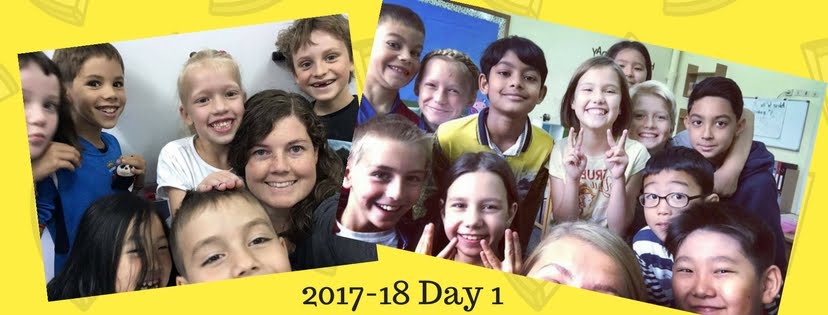
Cassie is 9 years old and enjoying the life of a little girl in Grade 4. She has lots of friends, a great teacher, and enjoys reading and art. She is friendly, loves to smile and right now is in to collecting Beanie Boos. She also loves to read the Warriors Series and enjoys listening to the 39 clues series. Into photography and graphic design she takes pictures, turns them into greeting cards and sells them at Cassie’s Creations
-
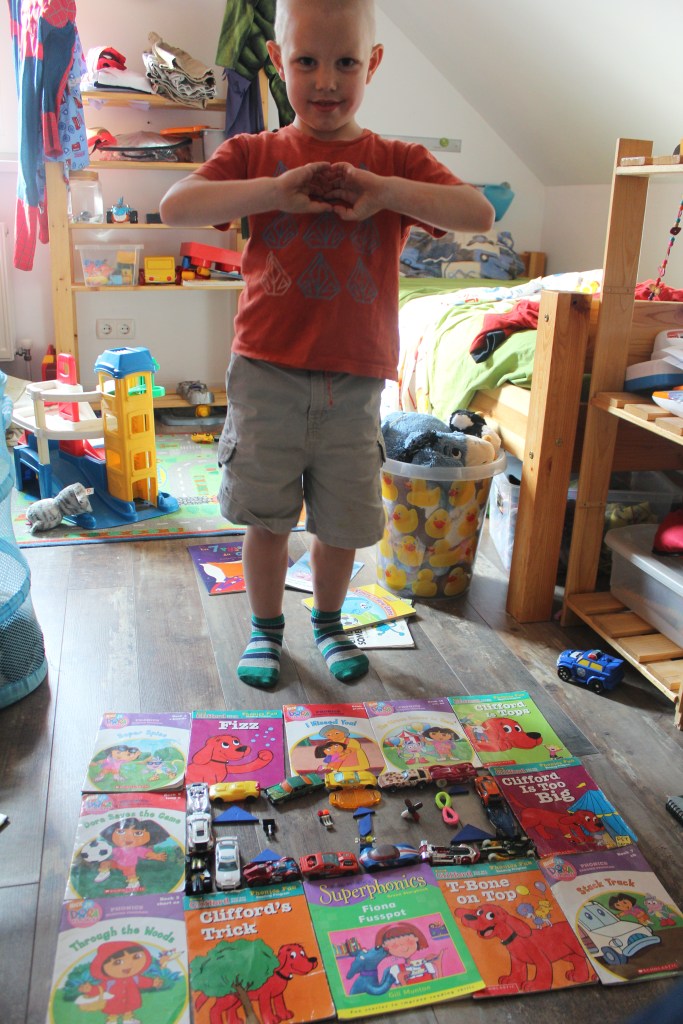
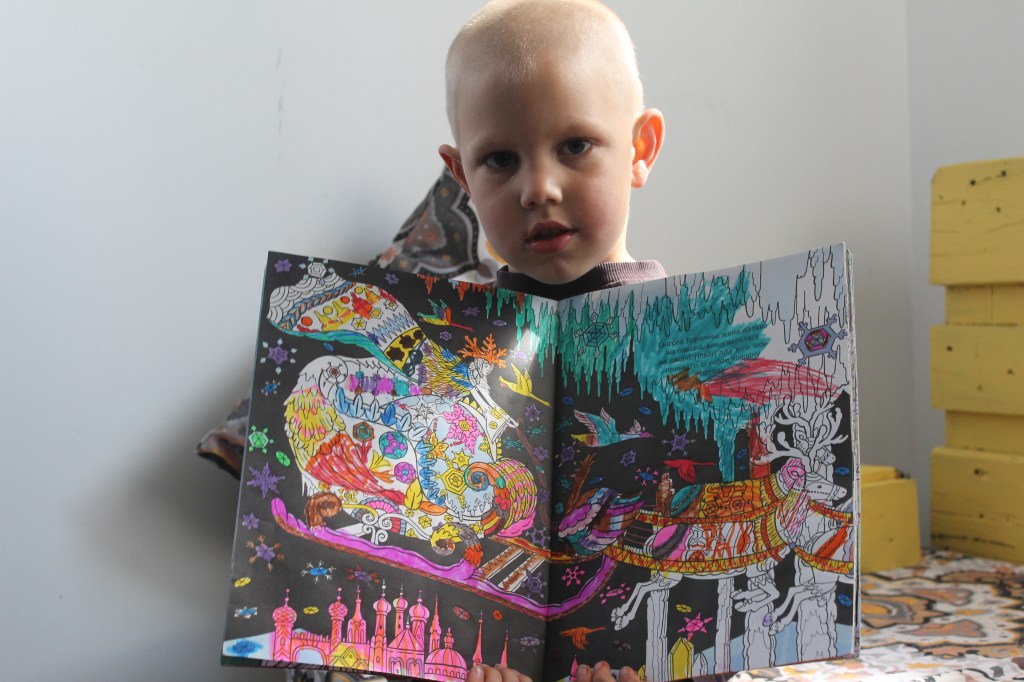
Got to love the sweet fun spirit of this 5 year old! Kai loves to have fun, look at books, having reading lesson with mom, colour pictures and go to his preschool where he speaks the local language with all of his friends. He is the one who gives lots of love and hugs. If you are having a bad day, Kai will help you feel better!
-
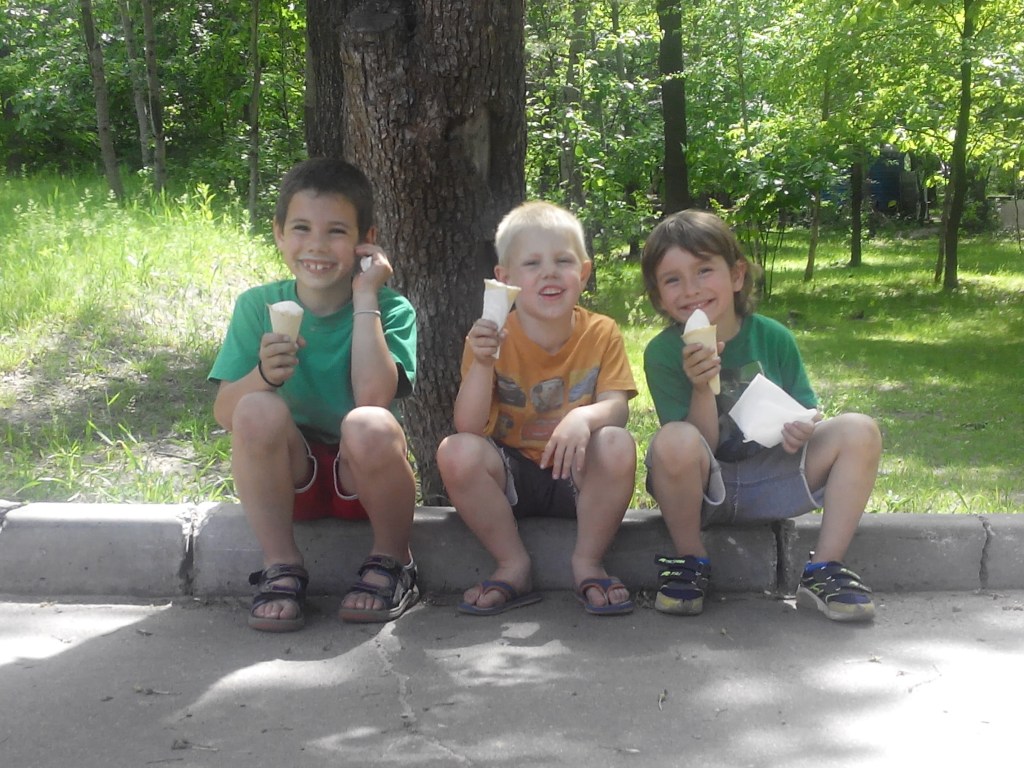
Jay is 7 and loves to watch CFL football! He always has a plan and loves to make that plan happen! Smarter than the average bear, he reads like a 14 year old and is doing math problems way beyond his age. But like he says, with much privilege comes much responsibility. Don’t worry though, he loves to run around with his dog Midnight, race around remote control cars and play with his latest hotwheel cars just like any 7 year old boy!
-

One thing that we often think about is how to teach our children about money and work. It isn’t just chores through which we want to teach them. We also want them to see how as we work to benefit mankind and God’s earth with creativity that we can create wealth which can in turn be used to benefit mankind and God’s earth that he made.
So we were really proud of Cassie as she took her creativity in photography and made something that can benefit others. Beautiful greeting cards. Check out her work as an almost-nine-year-old. www.CassiesCreations.ca
-
Usually we take our annual report submission to our church and make it public for anyone to read. I realized this morning we hadn’t done that yet.
So if you are interested in reading a summary of our work last year here is the pdf. It isn’t very long, should take about 3 minutes to read. Plus it has some nice pictures!
More importantly it shares the work we do, which really is done by everyone who participates in sending us in some way, whether financially, prayerfully, or simply emotionally (“You guys can do it!”).
-
At the beginning of 2016 I began the journey of writing the thesis for last part of my Master’s Degree in Biblical Studies. This past week I finally completed this huge project in my life! (You can read the thesis attached to this post if you would like). It was quite the road to travel. I learned a lot about myself and had to learn how to keep persevering even when it felt like there was still so much to do! I want to acknowledge many people that helped me with this project:
Many people helped me to write this thesis. First, I am thankful for the team of people that send and partner financially with our family. I could not have taken the time to study, nor could we do ministry here in Ukraine and in the surrounding countries without them. I want to acknowledge the team of overseas workers that we partner with here at YWAM Ukraine, specifically our Team.710 biblical studies circle as well as the leadership team. I have been less available to teach and lead due to the time it takes to complete a project such as this. I am grateful to them for their grace and patience. Special thanks goes to the 40 people who willingly volunteered to be a part of this research, dedicating 28 mornings and evenings to complete the program. I am also very thankful that my home pastor, Bruce Adams, has always encouraged my husband and me to continue academic studies in the midst of ministry.
I also want to express my deep gratitude to my supervisor, Dr. Wilrens Hornstra. He never failed to push me to be concrete in my aims, narrow in my target and broad in my application. He challenged me personally with the content of the study, as well as professionally in excellence. His numerous revisions and comments helped my language to be more precise and consistent. He also helped me to think deeply and critically, and yet have a positive outlook, on the results of the study. The process of writing this thesis lasted over a year and he always made time every week to pray with me and talk me through the next step, I truly would not have completed this study without him.
My family has patiently watched me focus and study day after day, usually waking up to find me at the computer. My husband has taken on extra responsibilities with ministry and our family throughout this year as I have sought to grow deeper. I’m so thankful that God has given me such a wonderful family, and specifically a supportive, faithful husband. My parents have also always challenged me to do my best and to never stop learning.
And lastly, I want to thank God whose purpose for me in this master’s thesis has been much deeper than completing a degree. It has been to truly experience theosis in my personal life. I pray that this process does not stop now that I have completed this thesis, but that I grow more and more to be the human that God designed, empowered by the Holy Spirit living within me.
-

Our teams first day in India An incredible trip – wonderful hosts who really invited us in to minister, a hungry audience for our seminars who were passionate for God, and time for depth and growth as a team. First a short story and some comments and then if you’re interested, lots of details.
During our study skill teaching times we include lots of simple practical application ideas. One day one man shared that his neighbor had recently parked in his spot and he was quite tempted to be angry. But instead, he practiced what he had been learning and went and talked to his neighbor and told him he could have the spot. Seems small but the people we were teaching had such a heart to grow and live it out!
Though they have had the Bible for a long time, they tend to read it more like a newspaper – interesting but sort of out of touch with their own life. Some of the comments they shared with our hosts:
– “We don’t get Bible Studies like this in Mizoram, we need more of this kind of teaching where we can discover truth on our own.” Monica
– “Studying the Bible this way has broaden my understanding. After the seminar of Jonah I was so inspired that next day I told everyone I met about it.” Dr A
– I always heard about having a mind of Christ but only on the seminar of Philippians did I actually understand what does it practically mean. No one every preached it this way. No one before explained what it means.” Tete-a
Culture
Its been a few years since I’ve been somewhere so remote but it was such a great experience! I’ve seen and experienced many things in my life and so I was actually surprised by some of the things that I learned this time. One particular aspect was my own culture shock. They lived like normal people do everywhere but they still have a tribal outlook on life. Its quite stereotypical but when I think tribal I think of huts, spears and subsistence living. But they weren’t that at all. Yet the way they conduct meetings, relate to each other and live is tribal in outlook. They don’t do much in the way of greetings like “hey, how’s it going” because they see each other so much and they won’t do much in the way of good bye’s either. And meetings of any formality always start with a long preamble of important people who say something before starting, something like honoring the elders and leaders in the group. I saw this in church on Sunday, at a cd/video release party at the hotel we stayed at, and even in our teaching sessions. As tribal people, they share very willingly, so during the day we would walk into homes and invite ourselves over for tea and a snack. But the thing was, it wasn’t inviting ourselves over – it was normal, expected, informal. There wasn’t much of a hello, even when we didn’t know the people.
Teaching
The teaching situation was terrific. With our first audience we had a whole week with the same group, two full days and four evenings so we could really spend some time with them. We covered a number of books, taught Inductive Bible Study method and an Overview of the Bible. The whole province we were in is basically all Christian. Everything shuts down on Sunday (not even corner stores are open) and nearly everyone goes to church. But church is a shallow thing for most people, a ritual largely devoid of meaning and disconnected from their daily lives.
 A younger generation is growing up that probably won’t carry on most of the traditions as well. Amazingly, God has preserved them from Hinduism to the west and the Buddhism to the east and north. They are surrounded but God has a special plan for them and is preparing a revival of hearts there that he will send to the nations! What a privilege it was to go and encourage them, teach them some Bible study skills, and spur them on in their walk with God.
Our Team
As our team has had some shifts in people this last year, we really wanted to spend some time growing and teaching together. Well this was a terrific time. My favorite part of the trip was a personal sharing time where we all really opened up about our lives. And watching each other teach we really got to see each others gifts and unique personalities shine and to see how we can do better together. But it wasn’t all deep, we did a few fun things together too like hiking in the mountains, seeing some ancient Indian caves with carvings. The other really fun thing was eating together. We ate so many meals in different environments, home cooking, street food, a fancy dinner from our hosts and plenty of authentic food. Daniel likes it pretty spicy, Esther will eat with her hands like a local, Nadia will undoubtedly order something that doesn’t come out right, Sonya and Thelma love the veg and Sasha is ready for a nice bowl of soup.And me, I really enjoyed the variety. I was quite worried that the spicy would hurt me but my stomach was strong enough – thanks for all your prayers!
Yes, thank you for your prayers and encouragement! We can control for efficiency but it is largely the Lord who makes us effective and that comes through obedience and prayer!

-
I recently received an email message from Ken concerning our choice to use the ESV:
“With all due respect I’m not participating in any class that requires me to dedicate my studies to the ESV as you do there. That book has someone else killing Goliath besides David in 2 Samuel 21:19. Acts 8:37 is totally removed. Even the numbers in Acts 8 skip 37 totally… 34,35,36,_,38,39, etc… The verse they scissored out dealt with “believing” and Jesus being the Son of God (Diety). It also removes the blood atonement from Romans 5:11 including removing the blood from Colossians 1:14. etc… That book is pathetic. I’m sticking with my King James Bible.”I feel the need to write about this absolutely criminal mentality. I have no problem with his conviction that the ESV is “pathetic” or that he is sticking with “his King James Bible”. Those are fine choices to make if he wishes. The problem is that he doesn’t know why those verses are different in the ESV, he hasn’t done his research. Opinions are fine but don’t bash newer translations only because you like the one you’ve read your whole life.
When King James ordered his translation back in the 16th century, they had some good quality manuscripts with which to translate into English. But in the 20th century with the discovery of the Dead Sea Scrolls amongst others the number, the age, and quality of the manuscripts increased and so newer translations are working off of better source documents than the KJV was. So when they remove a verse its because its not in the earlier manuscripts that we now have that they didn’t have when the KJV was translated.
-
Pics of India flashing on Flickr, click on “photos” above or here.
Cassie’s famous video below.
-
Thank you to everyone who prayed! It really meant a lot. Ben arrived today back from India at lunch time safe and sound. The kids were thrilled to get home from school and be welcomed with a big hug from Dad! It is amazing how much we all missed him. We just snuggled on the couch together for awhile… enjoying just being together.
Cassie made this video to tell her Dad all about the three weeks he was gone.
She would love a word of encouragement if you have time to watch it and leave a comment.
It will show you a few glimpses of our family life if you are interested.
-
Chapter 1. Research Question
Background
A case could be made that every research study is motivated from the personal experiences of the researcher himself. As a Canadian evangelical Christian, it was in my late twenties that I began to see signs of spiritual discontentment among my friends and fellow evangelicals. They were going to church weekly, reading their Bibles on a regular basis and perhaps even serving in leadership positions in their churches. However, when I would ask them if they were aware of God’s presence in their everyday life, their answer would commonly be, “Sometimes, but not really.” If I asked them if they thought they were growing in their faith, most didn’t even know what that would look like. At this time I was not measuring or recording these comments, it was simply an overall impression; when it came to the active experience of God in daily life, many evangelicals seemed dissatisfied and lost.
It was about this time when my husband and I moved overseas as Bible teachers. We moved to Ukraine, where the majority of the population identifies as Orthodox Christians. It seemed sensible to study the beliefs of the population that was our main target audience. I was ignorant of the differences that separated Protestant Christians and Orthodox Christians.
I began to read several books written about Orthodoxy. One of the books I read was Becoming Orthodox by Peter Gillquist (2009). Gillquist was a leader in Campus Crusade for Christ, an evangelical campus ministry in America. Over time he became frustrated, not with Christianity, but with the evangelical expression of it. Ultimately he chose to leave the evangelical church and convert to Orthodoxy, along with 260 others from Campus Crusade (3). Gillquist states he became disillusioned with the evangelical movement (7). He describes that he and his colleagues were “dissatisfied -or better to say, unsatisfied- with the status quo of what we perceived as dull, denominational American Christianity” (4). It occurred to me that he was personally experiencing the same challenge I observed with my friends and fellow evangelicals. I wondered what it was he found in the Orthodox expression of Christianity that was more satisfying than the evangelical expression. Gillquist wrote that one of the reasons that he became disillusioned with the evangelical movement was the lack of life change he observed in the campus culture, this in spite of the work he and his colleagues were doing (7). So what did the Orthodox expression of Christianity offer specifically in the area of life change that Gillquist’s evangelical expression did not?
Orthodoxy, Evangelicalism and Theosis
Orthodoxy is a branch of Christianity that claims to have begun with the apostles directly after the life of Jesus. In 1054 C.E the Christian church split due to multiple factors, political as well as doctrinal. One cause was the churches of the East refused to prioritize Rome over themselves. This led to the division between, what came to be known as, orthodox Christians and catholic Christians. In 1517 C.E another major split occurred in Christianity, this time in Rome. A growing group of discontented Christians, led by Martin Luther, left the Catholic Church. It is this branch of Christianity from which evangelicals stem.Figure 1.1
Timeline of Church History
Source: (St. John the Baptist Greek Orthodox Church 2017)Evangelicals are a sub group of Protestantism with specific set of beliefs. John Stackhouse is the senior advisor to the Centre for Research on Canadian Evangelicalism. He defines evangelicals as those who adhere to all of the following tenets:
• Orthodox and Orthoprax: Evangelicals subscribe to the main tenets—doctrinal, ethical, and liturgical—of the churches to which they belong.
• Crucicentric: Evangelicals are Christocentric in their piety and preaching, and emphasize particularly the necessity of Christ’s salvific work on the Cross.
• Biblicist: Evangelicals affirm the Bible as God’s Word written, true in what it says and functioning as their supreme written guide for life.
• Conversionist: Evangelicals believe that (1) everyone must trust Jesus as Saviour and follow him as Lord; and (2) everyone must co-operate with God in a life of growing spiritual maturity.
• Missional: Evangelicals actively co-operate with God in his mission of redeeming the world, and particularly in the proclamation of the gospel.
• Transdenominational: Evangelicals gladly partner with other Christians who hold these concerns, regardless of denominational stripe, in work to advance the Kingdom of God. (2007)
Therefore, evangelicals are two steps away from orthodoxy historically and are unfamiliar with many of the doctrines and practices of this ancient Christian church.
As an evangelical studying Orthodoxy, I found there were many intriguing differences. One particular doctrine seemed to offer a solution to this evangelical dissatisfaction: theosis. This is a doctrine that focuses on experiencing the presence of God in one’s life, which in turn leads to life change. Orthodox theologians, when explaining theosis, will often quote the early church father Athanasius. He wrote the famous words, “God became man so that men might become gods” (31825:192B). Athanasius was, and Orthodox theologians are still today, convinced that Jesus made this possible. The final goal to which every Christian must aim is to “attain theosis, ‘deification’ or ‘divinization’” (Ware 1997, 231). Daniel Clendenin, in his article “Partaker of Divinity- The Orthodox Doctrine of Theosis,” clarifies,
The contemporary Greek Orthodox theologian Christoforos Stavropoulos summarizes this Orthodox vision: In the Holy Scriptures, where God Himself speaks, we read of a unique call directed to us. God speaks to us human beings clearly and directly and He says: “I said, ‘You are gods, sons of the most high—all of you’” (Ps. 82:6 and John 10:34). Do we hear that voice? Do we understand the meaning of this calling? Do we accept that we should in fact be on a journey, a road which leads to Theosis? As human beings we each have this one, unique calling, to achieve Theosis. In other words, we are each destined to become a god; to be like God Himself, to be united with Him. The Apostle Peter describes with total clarity the purpose of life: we are to “become partakers of the divine nature” (2 Pet. 1:4). This is the purpose of your life; that you be a participant, a sharer in the nature of God and in the life of Christ, a communicant of divine energy—to become just like God, a true God. “Man,” writes Gregory of Nazianzus, “has been ordered to become God (Clendenin 1994, 365).The Philokalia is an important collection of Orthodox texts from the fourth to the fifteenth centuries compiled by St. Nicodimos the Hagiorite (1749–1809). One of these texts, the Theoretikon, puts it this way, “Now the purpose of our life is blessedness … not only to behold the Trinity, supreme in Kingship, but also to receive an influx of the divine and, as it were, to suffer deification” (Nikodimos and Makarios 1983, 356).
Orthodox theologians point to a variety of scriptures as the biblical basis for theosis. The first reference is in Genesis 1:23-36 when humans are made in the image and likeness of God. Orthodox theologians believe that when Jesus rose from the dead, he gave mankind the ability to return to that likeness as was intended from the beginning. John’s Gospel also points to this when Jesus Christ prays that his followers may be one with each other and he will be one with them just as he is one with God (John 17:21-23). Paul the apostle references this theme in many of his letters such as Colossians 1:27 where he speaks of Christ being in the believer. Moreover, Peter’s second letter has the famous statement that is used by many of the church fathers to teach regarding this doctrine,
His divine power has granted to us all things that pertain to likeness and godliness through the knowledge of him who called us to his own glory and excellence, by which he has granted to us his precious and very great promises so that through them you may become partakers of the divine nature, having escaped from the corruption that is in the world because of sinful desire (1 Peter 1:3-4).
In summarizing the biblical basis for theosis and combining it with his theological perspective, Jared Moore, a pastor and PhD student in Systematic Theology at Southern Baptist Theological Seminary writes in his online blog,
Theosis is the restoration and reintegration of the “image” or “likeness” of God, seriously distorted by the fall, in the children of God. One must note that theosis is more than the customary Protestant concept of sanctification. In theosis, while there is no ontological change of humanity into deity, there is a real impartation of the divine life to the whole human being—body and soul. In western churches, the concept of the imitation of Christ is the closest analogy to the theosis doctrine of the east; however, in Orthodox theology, Christians are not merely called to imitate Christ, but to manifest the energies of the Holy Spirit. Through receiving the Spirit, Christians have access to the spiritual power that belongs to Christ. The basis for such theosis is primarily the incarnation of Christ: the Orthodox church believes God joined humanity to divinity in the incarnation so that human beings might assume godlikeness and be imagers of God in His divine life, characters, and actions. The grace of God is essential, but so is human vigilance in obedience to all God has commanded. (2012)Theosis and Evangelicals
Most evangelicals have not heard the term theosis. They have not been clearly presented with this aspect of salvation. The western church has historically focused on judicial categories of salvation. Theologians such as Augustine, Karl Barth and Martin Luther are generally considered pillars of western theology. Christians, having studied their works concerning the crucial foundation of justification, have had their framework of salvation formed by these teachings.
Dan Clendenin proposes that these judicial categories, while helpful and biblical, are not complete, and can result in lack of direction. Writing about the doctrine of theosis in the Eastern Church, he states, “The real issue here seems to be one of a difference of emphasis—the east emphasizing mystical union through theosis, the west emphasizing juridical categories. No necessity forces us to choose between the two or to see them as mutually exclusive categories that are contradictory” (1994,367).
If evangelicals are dissatisfied, perhaps they are not experiencing this mystical union. Stated another way, perhaps they are unaware of God’s presence in their daily lives; making their lives seem empty. Could an understanding of theosis increase an evangelical’s awareness of God’s presence? Rakestraw proposes that an evangelical “may take a kind of quantum leap forward by understanding sanctification as the very life and energy of God in us.” He goes on to say, “we are becoming increasingly like God because we are participating more and more in his divine nature. As Christians, our bodies are in very truth temples of the indwelling Spirit, who radiates his presence and power through us to others” (Rakestraw 1997, 269). This leads to the question, what has been done to help evangelicals understand theosis?
Literature Review
Dan Clendenin has written two highly academic texts, Eastern Orthodox Theology: A Contemporary Reader (2004) and Eastern Orthodox Christianity: A Western Perspective (2004). These texts have sections on theosis but are unlikely to be read by the average evangelical. Timothy Kallistos Ware has also published The Orthodox Way (1979) and The Orthodox Church (1997) but these are dense books filled with difficult theological vocabulary. Another example of a book exploring theosis from a western perspective is Inhabiting the Cruciform God: Kenosis, Justification, and Theosis in Paul’s Narrative Soteriology (Gorman 2009). All of these books seem designed for academic use and are difficult for the average reader to access.
Journal publications also include articles about theosis and evangelicalism. Primarily these articles focus on theosis and its influence on many famous historical Christians such as John Calvin (Ollerton 2011), Jonathan Edwards (Strobel 2012), and Martin Luther (Trueman 2003).
To a much lesser degree, there have also been articles written with the focus of convincing evangelicals that there is merit to applying the doctrine of theosis.Michael W. Austin wrote The Doctrine of Theosis: A Transformational Union with Christ. He argues that evangelicals would benefit from being introduced to theosis (2015), much like Rakestraw (1997). Austin goes further than Rakestraw by offering ideas how an evangelical could pursue theosis. He advocates memorizing scripture, pursuing virtues and practicing spiritual disciplines in interpersonal relationships. . Yet again, these are scholarly works which most evangelicals will likely never read. Currently, there is no opportunity for the average evangelical to learn about theosis.
In summary, it is difficult to find any empirical studies done on the effects of evangelicals being taught the doctrine of theosis. The discussion has remained in the area of theory and debate. As has been noted, the history of theosis and evangelicalism has been studied, the value of evangelicals being taught about theosis has been asserted, but it has not been tested to see if this assertion is correct. I
Thesis Question
This research project aims to study empirically the effects that learning about theosis has on evangelicals. However, this aim brings two challenges. First, there is no material available for teaching about theosis to evangelicals in a way that is appealing and accessible. Second, studying the effects of learning about theosis has on evangelicals is much too broad for a first study. This aim needs to be narrowed considerably to provide measurable data.
To address the need for material a 28 day program was developed that teaches the basics of theosis and leads participants of the study through a theosis experience. The content of this program will be discussed in chapter 2.
Measuring the effects of this program is also challenging due to the nature of religion and personal experiences. Theosis is a doctrine that addresses spiritual experience: the presence of God dwelling in man, and man’s awareness of that presence. This is a highly personal, subjective matter. Therefore, this research measures awareness of God’s presence by participant’s self-evaluation.
In short, this research study explores whether or not a 28-day program that helps evangelicals explore theosis leads to an increased awareness of God’s presence in their lives.
Delineation and Limitations
While it would have been very interesting to consider evangelicals from different countries, or even different subgroups of Christianity, and compare their experiences with theosis, this would not have been practical or feasible, as this may be one of the first studies of its kind. Therefore, the scope of this study will only consider adult Canadian evangelicals. Furthermore, as mentioned above, it will focus specifically on personal awareness of God’s presence after being exposed to the doctrine of theosis through the 28 day program. Though there may be other effects, they will not be measured.
Ethical Considerations
In this study, there are not many ethical considerations due to the fact that all of the participants will choose to participate voluntarily. The names of the participants will be kept confidential, and all survey responses are anonymous. In addition, no financial renumeration will be given, therefore there will be no incentive to participate due to finance stress. -
Tomorrow January 18, Ben leaves for India for 3 weeks. We would really appreciate your prayers.
-
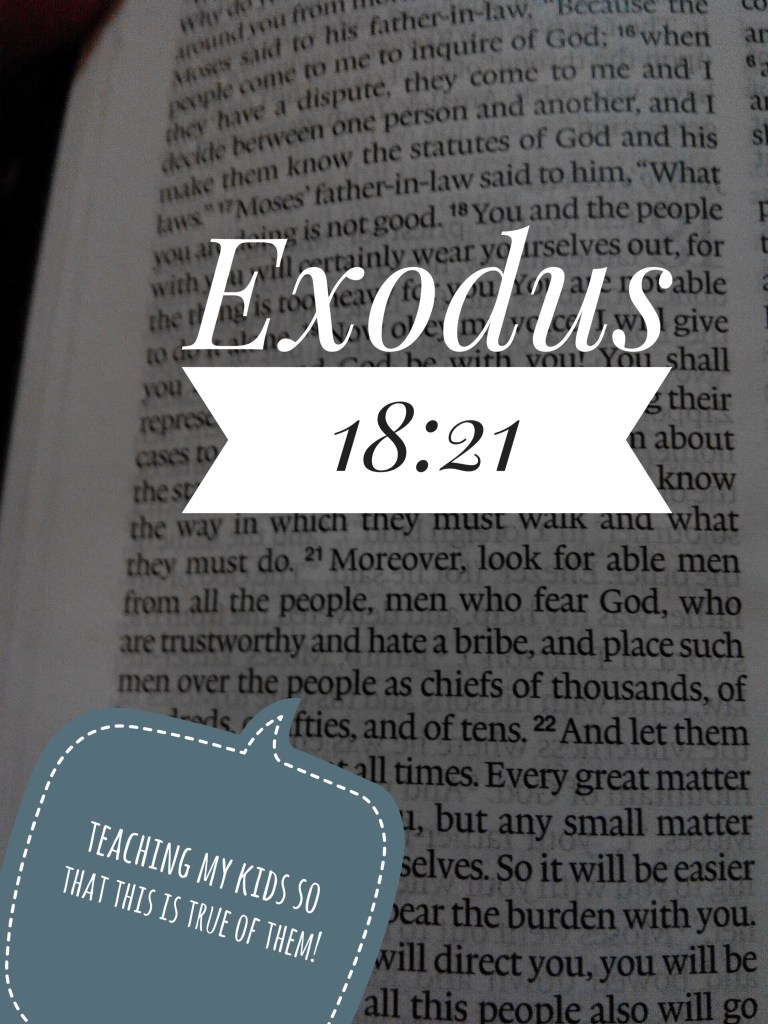
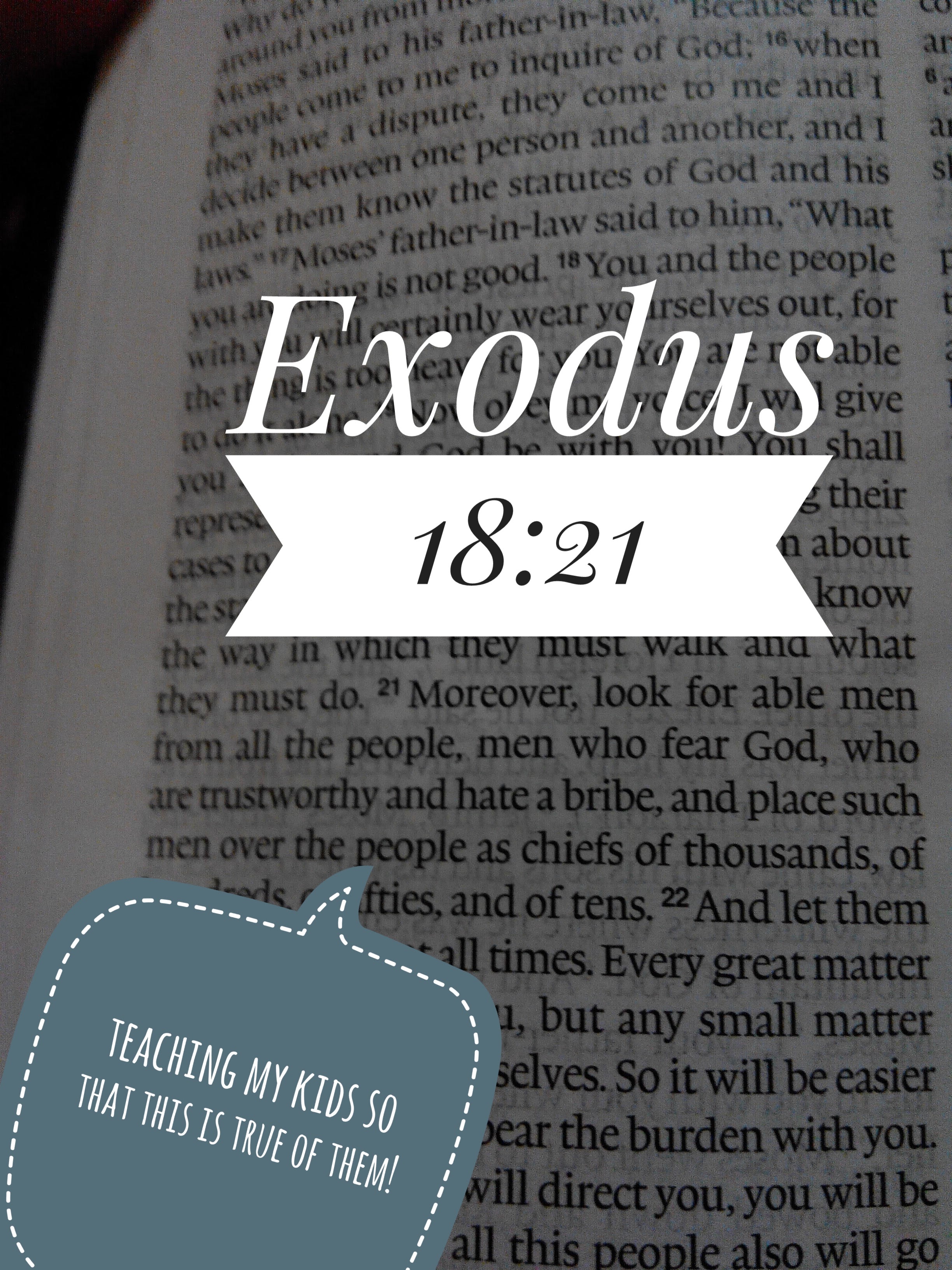
Jay and I read through this verse the other day and talked about strength, inner strength and outer strength. I really pray he grows up to be a trustworthy man, who is honest, hates bribes and stands against injustice. Later that day he decided he wants to be strong on the outside too and wants to do 20 pushups every night. Then he wanted to measure his biceps. 19 centimeters around- both the left and the right.
-
What’s life like as a missionary kid? It’s hard. It’s painful. And for many, it’s a blessing that can’t be beat.
by Sophia Lee December 10, 2016
The MK privilegeMost missionaries can remember a moment when they questioned the sacrifices of their calling. For Grant Funk, it was the day he found his oldest daughter Sarah sprawled on the snow, a splash of blond hair and bright parka in the middle of a classic Alaskan blizzard—a storm so heavy that the 15-year-old had to slide out the back window of the house to go feed her dog sled team. That was when her back suddenly tweaked.
Sarah was born with hemihyperplasia, a rare congenital condition that made her entire left side abnormally bigger than her right, causing multiple orthopedic and nerve problems. That day when her back gave out, every nerve in her body flared, and the girl collapsed as though paralyzed.
Funk rushed to his daughter, but touching her only made the pain worse. As Sarah inched her way back to the house on her elbows, her helpless father also dropped to his belly and crawled beside her. Father and daughter writhed their way through the deep snow, leaving a trail of tears—hers from physical pain, his from a parent’s ripping heart. At that moment, Funk couldn’t help thinking, “If I wasn’t a missionary, Sarah wouldn’t be in this situation right now.”
MISSIONARIES EXPECT BIG SACRIFICES: They sacrificed career ambitions, security, and stability when they heeded God’s call to “Go.” They left the warmth and familiarity of family, friends, culture, and home. Out in the field, they daily sacrifice comfort, time, and safety to obey God’s call to “Stay.”
Many missionaries tell me the toughest sacrifice to make is their family. The same hardy missionary who charges through Burmese jungles carrying a 35-pound sack of medical supplies said his greatest “faith-stretching” moment was when each of his three kids fell deathly sick from tropical diseases. One missionary in South Africa told me self-doubt struck him when he heard his usually composed wife weeping uncontrollably in the bathroom. Another missionary in inland Alaska said her children are “the chink in the armor that Satan often uses to attack us, because that’s where we’re weakest.”
Today, he still groans when he recalls what his children endured as missionary kids (MKs). But he says those long, hard years brought the greatest blessings to his family: “My kids came out scarred, and they will be scarred for life, but they came out with a passion for Christ that is so deep, you can’t get that way without the scar tissues.”
Other missionaries agree: One missionary in Bangkok—an MK from Zimbabwe who married an MK from Korea—said blessings flow when parents invite the whole family to God’s calling. She always tells her three MKs: “It’s not just mine. God put you here, so at this time, it’s also your mission field.”
That’s why the Funks call their kids “KMs”: Kid Missionaries. “If your kids are MKs, you’re working to protect them from all the MK pains and scars,” Funk said. “But if your kids are KMs, you are taking them to the front lines with you and showing them how to fight the battle. It’s a radical approach to ministry.”
I TOO WAS AN MK/KM. My parents dedicated their lives to discipling the Chinese peoples—with significant sacrifices. When my father quit his professor job at a university in South Korea to teach the Bible in Southeast Asia, my grandfather cut us off. The day we flew to Singapore with two suitcases, only our church family came to send us off at the airport.
In a foreign country of unfamiliar languages, food, and climate, my young mother almost single-handedly raised my younger brother and me, while my father jetted around Southeast Asia for three-quarters of the year. When he came back, he could never give us enough hugs and kisses, or buy us enough Chicken McNuggets. Our parents always told us that instead of losing Abba, we were “sending him” to save souls. “You are our biggest mission bridge,” they said, and it happened organically: Whenever my brother and I played in the streets, yelling in a jumble of Korean and Mandarin, strangers patted our heads and asked where we were from. Evangelism and Bible studies opened up simply because we tumbled with other kids at the playground.
However, I wasn’t always so noble-hearted: Whenever my father traveled overseas, I awoke with tear-swollen eyes from nightmares in which religious extremists hacked my father to death. I also resented “those Chinese people” for stealing my father’s time, love, and energy. By age 10 I refused to speak Mandarin and became a loud and proud Korean—until our biennial trips to South Korea clarified that I didn’t belong there, either.
When people ask me where I’m from, I always hesitate: Do they mean my ethnicity? Citizenship? Hometown? Current address? My own parents don’t understand why I so struggle to define my identity. It especially bothers them that I didn’t grow up knowing our extended family. We missed New Year’s gatherings, our grandparents’ 70th birthdays (a significant celebration in Korea) and their funerals, and our cousins’ weddings. It bugs my parents that I don’t share their memories and affection for our mother country, that I don’t cheer for South Korea in the World Cup or desire a Korean husband.
In my parents’ eyes, I’m denying an integral part of myself. In my heart, I feel like a restless nomad who can settle everywhere without belonging anywhere—and to me, that’s a wonderful asset: As one 15-year-old MK in Burma described, not having an earthly home makes me look forward to the heavenly home to which I’ll belong fully and forever.
MANY FELLOW MKS I’ve met feel the same way. At an international school in Bangkok, I sat with a group of teenage MKs and asked, “So, where are you from?” Everyone hesitated, then laughed. One MK said, “I have no idea where I’m from.” We nodded knowingly.
Person has lived in a bamboo hut in a tribal mountain village, attended a school reserved for the royal Thai family, and was the only Christian in class for most of his life. But the prospect of attending an American college made him nervous. During a campus tour at Baylor University, he remembers sitting in awkward silence while other students bopped along to pop music on the radio. While his peers rocked designer jeans, he wore bargains from Goodwill. When they geeked out over the latest Hunger Games movie, he pretended to be interested.
Despite his apprehension, Person said being an MK is a blessing: “I want to embrace what I’ve been shown my entire life.”
WHILE SARAH FUNK was dating Luke Stewart, a lanky Californian, they got into a heated debate. After telling Luke about her difficult childhood, Sarah said she still wanted to raise her kids as MKs. He was flabbergasted: “That’s cruel! How can you want your kids to grow up like that?” Sarah was indignant: “But I want my kids to feel uncomfortable! It’s the best life, the best way to see the world!”
Stewart must have lost that argument, because he and Sarah are now married, with five MKs of their own. Stewart pastors a Baptist church in Kobuk, a tiny Inuit village located 40 miles above the Arctic Circle. Using the Stewart children as an excuse, village kids visit their house regularly to talk to Sarah Stewart about the violence, abuse, and fears that torment them. Like her parents, Stewart doesn’t worry much about her family’s meager finances, even when the only food left in the fridge is ketchup and mayonnaise—she’s experienced too much of God’s faithful providence as an MK to fret over tomorrow’s bread. But she cannot shake off one worry: “What I hate now as a parent is seeing and knowing what’s coming for my kids.”
It’s already happening: The Kobuk queen bee has decided to pick on Stewart’s oldest daughter Dessie, a dreamy, horse-crazy 8-year-old. When Stewart sees the neighborhood kids goading her daughter with sticks, she seethes and grieves and fears there’s more to come. What’s going to happen when Dessie is a teenager, attracting gazes from boys and stirring more resentment among the other girls? When her thoughts travel in that direction, Stewart panics: “Oh no! I don’t want that for my kids.” But then she remembers how God is already blessing and using her kids, and concludes, “I want my kids to feel that it’s a privilege to be an MK.”
One Sunday in Kobuk, I found Dessie crouching silently by the stoop of the church while the other kids laughed and played outside. “What’s wrong?” I asked, squatting next to her. Trying not to cry, Dessie raised her golden-blond head and pointed to a gregarious girl in pink: “That’s her.” Oh. Her bully. Apparently, the queen bee had deployed her sting again.
Seeing Dessie sad made my blood boil, so I half-jokingly said, “Want me to go kick her butt?” I had expected Dessie to laugh, but instead she immediately shook her head: “No, I gotta be nice and love her. She needs to know Jesus.” I bit back a smile: Ah, another Kid Missionary.